


What Is a Construction Contract in Ontario Homes
Most Canadian homeowners are surprised to learn that even small misunderstandings in a construction contract can lead to major project setbacks and unexpected expenses. For families in Durham Region, Ontario, planning a renovation or custom home, knowing exactly how Canadian construction contracts work is crucial to protect investments and ensure smooth progress. This guide breaks down contract essentials, so you can approach your next project with confidence and avoid the pitfalls that catch so many others off guard.
Key Takeaways
| Point | Details |
|---|---|
| Understanding Contract Types | Familiarise yourself with different residential construction contract types to choose the best fit for your project. |
| Importance of Legal Review | Always have a legal professional review your contract before signing to protect your interests. |
| Risk Management Strategies | Include detailed dispute resolution mechanisms and insurance provisions to safeguard against potential project risks. |
| Clear Roles and Payment Terms | Define clear roles and establish milestone payment structures to ensure accountability and financial clarity throughout the project. |
Defining a Construction Contract in Canada
A construction contract is a legally binding agreement that establishes the terms, conditions, and expectations between property owners and contractors for residential building projects in Canada. These contracts are fundamental documents that outline project scope, financial arrangements, timelines, and responsibilities for home construction or renovation work.
Canadian construction contract law operates under two distinct legal frameworks: common law in most provinces and civil law in Quebec. Canadian construction contracts are typically governed by principles of contractual freedom, which means courts generally respect and uphold the specific terms agreed upon by involved parties. The core purpose is to create a comprehensive roadmap that protects both the homeowner and the contractor’s interests while providing clear guidelines for project execution.
Typically, a robust construction contract will include several critical components: detailed project specifications, precise cost breakdowns, payment schedules, material quality standards, project timelines, warranty provisions, and mechanisms for addressing potential disputes. In Ontario, these contracts often reference standard templates developed by the Canadian Construction Documents Committee (CCDC), which provide standardized frameworks that help minimize misunderstandings and legal complications.
Pro tip: Always have a legal professional review your construction contract before signing to ensure all critical details are accurately captured and your interests are fully protected.
Types of Residential Construction Contracts
Residential construction contracts in Ontario cover several distinct contract types, each designed to address different project requirements and risk management strategies. The Canadian construction industry recognizes five primary contract formats that homeowners should understand before initiating their building or renovation project.
The first major type is the Stipulated Price Contract, which provides a fixed total cost for the entire project. This contract offers homeowners clear financial predictability, with the contractor committing to complete the work for a predetermined amount. In contrast, a Cost-Plus Contract reimburses the contractor for actual expenses plus an additional percentage or fixed fee, offering more flexibility but potentially introducing higher financial uncertainty.
Another significant contract type is the Time and Material Contract, where payment is based on actual labour hours and materials used. This approach works well for projects with uncertain scope or complex renovation requirements. Design-Build Contracts represent a comprehensive approach where a single entity manages both design and construction, streamlining communication and potentially reducing project complications. Construction Management Contracts involve a professional manager coordinating various subcontractors, which can be particularly useful for complex or large-scale residential projects.
Here is a comparison of common residential construction contract types in Ontario:
| Contract Type | Cost Predictability | Best For |
|---|---|---|
| Stipulated Price | High, fixed project cost | Clearly defined, straightforward projects |
| Cost-Plus | Variable, depends on use | Projects with uncertain scope |
| Time and Material | Low, based on inputs | Complex renovations, changing requirements |
| Design-Build | Moderate, single entity | Simplified communication, faster delivery |
| Construction Management | Varies, manager oversight | Large, multi-trade residential builds |
Pro tip: Consult with a construction lawyer to carefully review your chosen contract type, ensuring it aligns with your specific project needs and provides appropriate protections for your investment.
Key Elements and Legal Requirements
Canadian residential construction contracts require comprehensive documentation to protect both homeowners and contractors. Federal contract guidelines mandate detailed documentation outlining specific legal requirements that ensure clarity, accountability, and legal enforceability throughout the construction process.
Critical legal elements typically include precise scope of work definitions, which explicitly outline project boundaries, materials to be used, specific performance standards, and detailed project specifications. These definitions prevent misunderstandings by establishing clear expectations about project deliverables. The contract must comprehensively address financial terms, including complete payment schedules, milestone payments, percentage of completion benchmarks, and mechanisms for handling potential cost variations or unexpected expenses.

Additional mandatory legal requirements encompass change order protocols, dispute resolution mechanisms, warranty provisions, and compliance with local building codes and municipal regulations. Homeowners should ensure their contracts include comprehensive force majeure clauses that outline procedures for unexpected events, such as material shortages, labour disruptions, or extreme weather conditions that might impact project timelines and completion. Insurance requirements, worker safety provisions, and potential liability clauses are equally crucial components that protect both parties from unforeseen complications.
The table below highlights key contract elements and their importance for homeowners and contractors:
| Contract Element | Importance for Homeowner | Importance for Contractor |
|---|---|---|
| Payment Schedule | Ensures budget control | Guarantees timely compensation |
| Change Order Process | Manages scope and extra costs | Defines approval for alterations |
| Insurance Provisions | Protects against project risks | Limits personal liability |
| Warranty Clauses | Provides recourse for defects | Sets clear after-completion obligations |
| Dispute Mechanisms | Clarifies how issues get resolved | Minimizes costly court involvement |
Pro tip: Request a comprehensive legal review of your construction contract by a lawyer specializing in residential construction to identify potential gaps or risks before signing.
Roles, Obligations, and Payment Terms
Residential construction contracts in Ontario meticulously define the roles and responsibilities of each party involved in the project. Contract administration practices establish clear guidelines for procurement and project completion, ensuring transparency and mutual understanding between homeowners and contractors.
Typically, the contract outlines specific obligations for each party. The homeowner’s primary responsibilities include providing timely access to the property, making agreed-upon payments according to the established schedule, and maintaining clear communication about project expectations. Contractors, conversely, are obligated to complete the work according to specified standards, adhere to building codes, maintain proper licensing and insurance, and provide transparent progress reports. Subcontractors and specialized trades are usually bound by similar contractual requirements, creating a comprehensive network of accountability.
Payment terms form a critical component of residential construction contracts, with most Ontario projects utilizing milestone-based payment structures. These arrangements typically involve progress payments tied to specific project stages or completion percentages, which protect both the homeowner and contractor. The payment schedule usually requires certification by independent professionals who verify the quality and extent of completed work. Ontario’s prompt payment legislation further reinforces these terms, mandating specific timelines for contractor compensation and providing legal recourse in cases of payment delays or disputes.
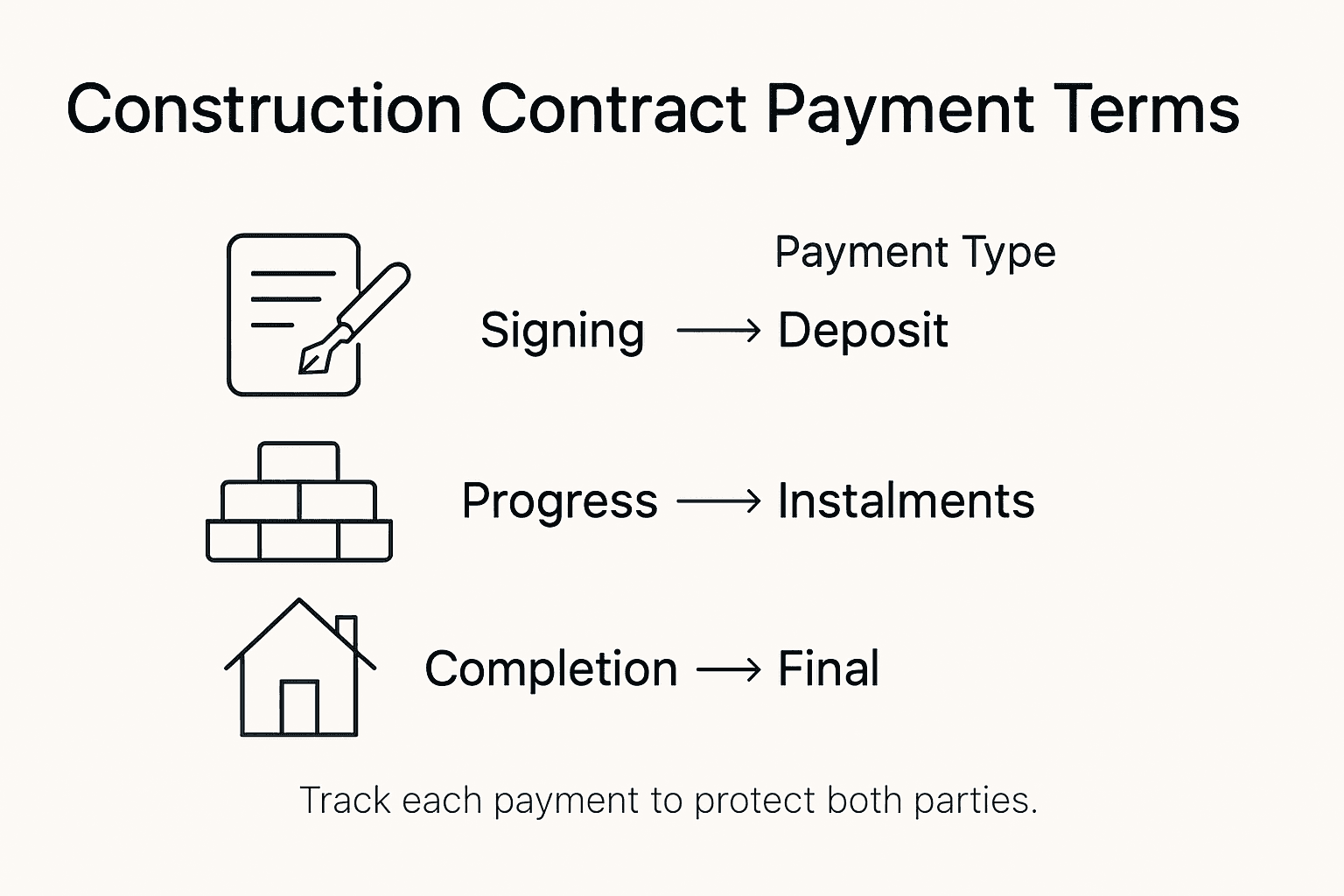
Pro tip: Create a detailed spreadsheet tracking each contract milestone, payment amount, and completion date to ensure you maintain precise financial records throughout the construction project.
Risks, Disputes, and Consumer Protections
Residential construction projects inherently involve complex legal and financial risks that require comprehensive protective measures. Canadian construction contracts typically address potential disputes through structured resolution mechanisms, designed to protect both homeowners and contractors from potential conflicts and financial uncertainties.
Common risks in residential construction include project delays, unexpected cost overruns, quality of workmanship issues, and potential breaches of contractual obligations. Dispute resolution provisions are critical components of construction contracts, often establishing a hierarchical approach to conflict management. These typically include mandatory negotiation periods, followed by mediation processes, and potentially binding arbitration before any court litigation becomes necessary. Provincial legislation in Ontario provides additional layers of protection, including prompt payment laws that ensure contractors receive timely compensation and mechanisms for addressing performance-related disputes.
Consumer protections in residential construction contracts are multifaceted, encompassing warranty provisions, insurance requirements, and legal safeguards against potential contractor misconduct. Homeowners are protected by building codes, licensing requirements for contractors, and statutory warranties that guarantee minimum standards of workmanship and materials. These protections extend to addressing issues like structural defects, ensuring that homeowners have recourse in cases of significant construction failures or non-compliance with agreed-upon specifications.
Pro tip: Document every interaction, save all communication records, and maintain a detailed project log to create a comprehensive paper trail that can be crucial if disputes arise during your construction project.
Secure Your Ontario Home Project with Trusted Construction Contracts and Expert Craftsmanship
Understanding the complexities of construction contracts in Ontario is crucial to protect your investment and ensure your home project runs smoothly. This article highlights the importance of clear payment schedules, precise scope of work definitions, and dispute resolution mechanisms—essential elements that can save you from costly surprises and delays. At Henley Contracting, we recognize these challenges and offer tailored solutions for homeowners who want transparent agreements and superior quality in their custom builds or renovations.
Ready to move forward with confidence and clarity on your residential construction contract? Explore our Custom Build – Henley Contracting Ltd. services where craftsmanship meets comprehensive project management. With over three decades of experience serving the Durham region and nearby communities, we focus on honouring every contract term and delivering excellence in every nail and beam. Visit our homepage today and take the first step to a worry-free construction experience guided by trusted professionals.
Frequently Asked Questions
What is a construction contract?
A construction contract is a legally binding agreement that outlines the terms, conditions, and expectations between property owners and contractors for residential building projects. It includes details like the project scope, financial arrangements, timelines, and responsibilities.
What are the key components of a construction contract?
Key components of a construction contract typically include project specifications, cost breakdowns, payment schedules, material quality standards, project timelines, warranty provisions, and dispute resolution mechanisms.
What types of construction contracts are available for residential projects?
The primary types of construction contracts include Stipulated Price Contracts, Cost-Plus Contracts, Time and Material Contracts, Design-Build Contracts, and Construction Management Contracts, each catering to different project needs and risk management strategies.
How do payment terms work in a construction contract?
Payment terms in a construction contract often utilize milestone-based structures, where payments are tied to specific project stages or completion percentages. This helps protect both the homeowner and contractor by ensuring that progress is verified before payments are made.


