


Renovation Project Checklist for a Stress-Free Remodel
Over half of Canadian renovation projects in Ontario go over budget or run into delays when homeowners skip proper planning. If you’re preparing for a custom home project in Durham Region, a missed step can cost thousands and lead to unnecessary stress. This checklist gives you a clear and practical system to manage each phase, protect your investment, and keep your renovation on track from start to finish.
Quick Summary
| Key Insight | Explanation |
|---|---|
| 1. Assess Renovation Needs | Understand your goals and priorities to create a focused renovation plan. |
| 2. Create a Realistic Budget | Develop a detailed budget including a buffer for unexpected costs. |
| 3. Select Qualified Contractors | Verify credentials and ensure contractors follow local permit regulations. |
| 4. Plan a Detailed Timeline | Establish a timeline that accounts for material availability and contractor schedules. |
| 5. Conduct Final Inspections | Verify that all work meets building codes and your design specifications before final payment. |
Step 1: Assess Your Renovation Needs and Set Goals
Successful home renovations start with a clear understanding of your project’s purpose and desired outcomes. Before picking up a hammer or selecting paint colours, you need a strategic roadmap that guides your entire remodelling journey. Renovation planning requires careful consideration of your home’s current state, your family’s needs, and your long term goals.
Begin by conducting a thorough assessment of your existing space. Walk through each room and identify what works, what doesn’t, and what requires immediate attention. Are you renovating to improve functionality, update aesthetic appeal, increase home value, or address structural issues? Canadian homeowners often prioritize repairs and comfort improvements when planning renovations. Make a comprehensive list of must-have changes versus nice-to-have upgrades, considering factors like household dynamics, future plans, and budget constraints.
Create a detailed renovation brief that outlines specific objectives, target areas, and expected outcomes. This document will serve as your blueprint, helping contractors understand your vision and keeping your project focused. Consider potential return on investment, neighbourhood standards, and how proposed changes align with your home’s overall design and value. By establishing clear goals upfront, you reduce the likelihood of costly mid project changes and ensure a smoother renovation experience.
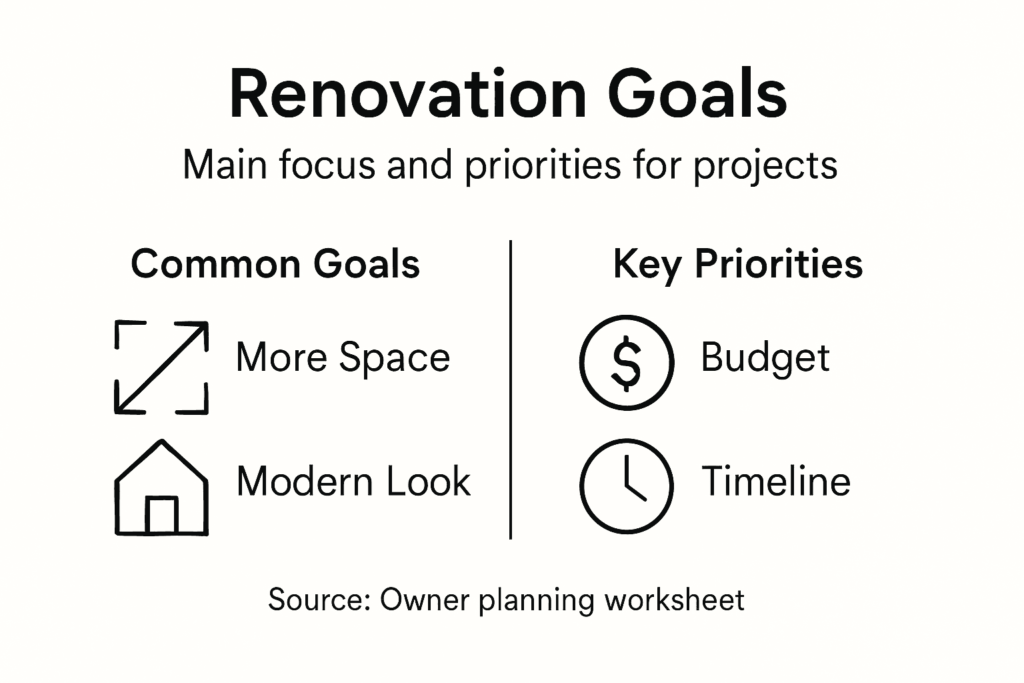
Here is a summary of common renovation goals and how they typically guide project decisions:
| Renovation Goal | Design Focus | Typical Priorities |
|---|---|---|
| Increase home value | Modern updates | Kitchen, bathrooms, curb appeal |
| Improve functionality | Space optimization | Storage, layout adjustments |
| Address structural issues | Safety and durability | Foundation, roofing, insulation |
| Enhance aesthetics | Visual appeal | Paint, flooring, fixtures |
Pro tip: Photograph and measure each space before starting your renovation to create an accurate reference point for design and planning discussions.
Step 2: Create a Realistic Budget and Secure Financing
Budget planning is the financial backbone of any successful home renovation project. Your goal is to develop a comprehensive financial strategy that covers all potential expenses while maintaining flexibility for unexpected challenges. Realistic renovation budgeting requires a systematic and transparent approach to understanding your total project costs.
Start by obtaining detailed quotes from multiple contractors to establish a baseline for your renovation expenses. Break down your budget into categories like materials, labour, permits, design fees, and contingency funds. Canadian home renovation budgets typically require a 10 to 20 percent buffer for unforeseen circumstances. Research financing options such as home equity lines of credit, personal loans, or renovation specific mortgages that align with your project scope. Consider consulting a financial advisor to explore the most suitable funding strategies for your specific situation.
Prioritize your renovation needs by distinguishing between essential repairs and aesthetic upgrades. This approach helps you allocate funds strategically and potentially phase your project if the total cost exceeds your immediate budget. Track all expenses meticulously, maintain open communication with your contractor about financial expectations, and be prepared to make informed compromises without sacrificing the project’s fundamental objectives.
Below is a comparison of popular renovation financing options for Ontario homeowners:
| Financing Option | Typical Use Case | Key Considerations |
|---|---|---|
| Home equity line of credit | Large-scale renovations | Variable interest, property as collateral |
| Renovation mortgage | Major structural upgrades | Must meet lender criteria |
| Personal loan | Smaller or phased projects | Fixed repayments, faster approval |
| Savings | Minor cosmetic improvements | No interest, limits project scope |
Pro tip: Create a dedicated spreadsheet to track every renovation expense, including a separate column for actual versus budgeted costs to maintain financial transparency.
Step 3: Choose Professional Contractors and Obtain Permits
Selecting the right contractors and navigating the permit landscape are critical steps in ensuring a smooth renovation experience. Your objective is to identify skilled professionals who can transform your vision into reality while ensuring all legal and regulatory requirements are met. Contractor selection requires careful credential verification to protect your investment and guarantee quality workmanship.
Begin by requesting detailed quotes from at least three licensed contractors with proven experience in your specific type of renovation. Review their portfolios, check references, and verify their insurance and certification status. Look for professionals who are transparent about their process, communicate clearly, and demonstrate a comprehensive understanding of local building codes and permit requirements. Pay special attention to contractors who proactively discuss permit acquisition and are willing to handle the necessary documentation on your behalf.
Understand the permit requirements specific to your renovation project. Different municipalities in Ontario have varying regulations for home improvements, so consult your local building department to determine exactly what permits you need. Some renovations may require multiple permits depending on the scope of work, such as electrical, plumbing, structural, or zoning permits. Ensure your chosen contractor is familiar with these requirements and can guide you through the application process, helping you avoid potential legal complications or project delays.
Pro tip: Request and retain copies of all contractor licences, insurance documents, and permit approvals throughout your renovation project for your personal records.
Step 4: Plan Your Timeline and Order Materials
Creating a comprehensive project timeline and strategically ordering materials are essential for maintaining momentum and avoiding potential renovation roadblocks. Your goal is to develop a realistic schedule that accounts for material procurement, contractor availability, and potential logistical challenges while ensuring a smooth workflow from start to finish.
Start by consulting with your chosen contractors to develop a detailed project timeline that breaks down each phase of the renovation. Consider seasonal constraints, potential weather impacts, and the availability of specific materials and trades in the Ontario region. Create a visual project calendar that outlines key milestones, including material delivery dates, critical construction phases, and potential buffer periods for unexpected delays. Research and order materials well in advance, particularly for custom or speciality items that may have extended lead times. Consider coordinating material deliveries to align with specific project stages to minimize on site storage and potential damage.

Prioritize flexibility in your timeline while maintaining clear communication channels with all involved contractors and suppliers. Regularly review and adjust your project schedule as needed, understanding that renovations often encounter unforeseen challenges. Maintain digital and physical copies of all material orders, delivery confirmations, and expected arrival dates. Track your project progress consistently and be prepared to make quick decisions if supply chain disruptions or scheduling conflicts arise.
Pro tip: Create a digital project management folder where you can store all material invoices, delivery notes, and timeline documents for easy reference and tracking.
Step 5: Monitor Project Progress and Quality
Effective project monitoring is crucial to ensuring your renovation meets expected standards and stays on track. Tracking renovation progress requires consistent communication and proactive engagement with your contractors to maintain quality and momentum throughout the project.
Schedule regular site visits and progress meetings with your primary contractor to review completed work, upcoming phases, and potential challenges. Develop a systematic approach to quality control by creating a detailed checklist that aligns with your original project specifications. Inspect work at critical junctures such as framing, electrical rough-in, plumbing, and finishing stages. Document your observations with photographs and written notes, addressing any concerns immediately to prevent minor issues from becoming significant problems. Pay close attention to craftsmanship details, material quality, and adherence to the original design and permit requirements.
Maintain open and professional communication channels with your renovation team. Be constructive in your feedback, focusing on specific observations and expectations rather than emotional reactions. Keep all communication documented in writing, including email or text exchanges, to create a clear record of discussions and decisions. Stay flexible but firm about project standards, understanding that some minor adjustments may be necessary while ensuring the overall vision and quality of your renovation remain consistent.
Pro tip: Create a dedicated digital folder to store all project documentation, progress photos, and communication records for easy reference and potential future disputes.
Step 6: Complete Final Inspections and Approve Work
The final stage of your renovation project involves comprehensive inspections and careful work verification to ensure every detail meets your expectations and local building standards. Municipal inspections are crucial for renovation compliance and provide an essential quality checkpoint for your investment.
Schedule official municipal building inspections to confirm that all renovation work meets local building codes and safety regulations. Coordinate with your contractor to be present during these inspections, allowing them to address any potential issues immediately. Conduct a thorough personal walkthrough of the completed project, systematically checking each area against your original design specifications. Document any discrepancies or unfinished elements in writing, creating a comprehensive list for your contractor to address. Pay special attention to functional aspects like electrical systems, plumbing, structural integrity, and finishing details.
Before making final payment, ensure all contractual obligations have been met and any identified issues have been completely resolved. Request and review all warranty documentation, permits, and compliance certificates. Obtain comprehensive documentation of all work completed, including photographs, material specifications, and any relevant manufacturer warranties. Maintain these records for future reference and potential insurance or resale purposes.
Pro tip: Create a comprehensive project completion binder with all inspection reports, warranties, and final documentation to protect your renovation investment.
Simplify Your Renovation Journey with Expert Support
Taking on a renovation project checklist can feel overwhelming when you are managing budgets, timelines, permits and quality control all at once. The challenge of turning your renovation goals into reality while avoiding costly delays and compromises is a common concern for homeowners. This is why partnering with trusted professionals who understand the local building landscape and your unique needs is essential. From setting clear objectives to final inspections, every step matters to ensure a stress-free remodel.
Henley Contracting has over three decades of experience delivering quality craftsmanship and dependable service throughout Durham, Kawartha Lakes, and Northumberland County. Whether you want to improve home functionality, boost value or enhance aesthetics, our team will guide you through the entire process with transparency and expertise. Explore our Renovations services to see how we turn renovation checklists into reality.

Ready to take control of your project timeline and budget while ensuring top-quality results? Contact Henley Contracting today at https://henleycontracting.com and let us help you transform your home with confidence. Discover comprehensive solutions for your next remodel and start your stress-free renovation journey now.
Frequently Asked Questions
What steps should I take to assess my renovation needs?
Begin by carefully evaluating each room in your home to identify what works, what doesn’t, and what changes are essential. Create a list that differentiates between must-have changes and nice-to-have upgrades, considering your family’s needs and long-term goals.
How do I establish a realistic budget for my renovation project?
To create a realistic budget, obtain detailed quotes from multiple contractors and categorise your expenses, including materials, labour, and permits. Add a buffer of 10 to 20 percent for unexpected costs to ensure your financial plan remains flexible.
What should I look for when selecting contractors for my renovation?
Request detailed quotes from at least three licensed contractors and evaluate their portfolios, references, and insurance status. Ensure they have experience with your specific type of renovation and are familiar with local building codes and permits.
How can I stay on top of my renovation project timeline and materials?
Develop a comprehensive project timeline in consultation with your contractors and order materials well in advance, especially for custom items. Regularly review your project schedule and be adaptable to any unforeseen challenges that may arise.
What is involved in the final inspection process of a renovation?
The final inspection includes scheduling official municipal inspections to verify that all work meets local building codes. Conduct a thorough walkthrough with your contractor, documenting any discrepancies before making final payment to ensure all contractual obligations are fulfilled.
How should I monitor the quality of work during my renovation?
Monitor project quality by scheduling regular site visits and creating a checklist based on your original specifications. Document any findings with photographs and written notes to address issues promptly and maintain open communication with your contractors.


