


How to Manage Renovation Costs for Efficient Home Upgrades
More than half of Canadian homeowners report unexpected costs derailing their renovation plans each year. Managing a home upgrade in Durham Region can feel daunting, especially when every dollar counts and budget mistakes are common. Whether you want to stretch your renovation dollars, avoid costly surprises, or add true value to your property, this guide reveals practical strategies tailored for Canadian homeowners intent on smart, cost-effective improvements.
Quick Summary
| Key Insight | Explanation |
|---|---|
| 1. Set clear renovation goals | Understand key objectives to guide your renovation process effectively. |
| 2. Create a realistic budget | Establish a budget that includes a contingency fund for unexpected costs. |
| 3. Prioritize essential upgrades | Focus on crucial repairs like structural work before aesthetic changes. |
| 4. Choose reliable contractors | Vet contractors through detailed proposals and check their credentials. |
| 5. Review completed work thoroughly | Ensure all renovations meet expectations and align with initial plans. |
Step 1: Assess renovation goals and set a practical budget
Setting a practical budget begins with a clear understanding of your specific renovation objectives. Homeowners in Durham Region need to start by carefully evaluating what they want to achieve with their home upgrade, whether it’s improving functionality, increasing property value, or addressing structural concerns. Essential home renovation planning requires a systematic approach that balances your vision with financial realities.
Carefully documenting your renovation goals involves creating a comprehensive list of desired improvements, prioritizing them based on necessity and potential return on investment. The Canadian government recommends making a detailed inventory of your renovation objectives, considering factors like structural repairs, aesthetic upgrades, and energy efficiency improvements. Homeowners should evaluate their home’s current condition, understanding which renovations are critical repairs versus optional enhancements. Consulting multiple contractors for accurate quotes will help establish a realistic budget that accounts for potential unexpected expenses.
A practical budget requires more than just tallying potential costs. You must factor in contingency funds typically ranging from 10% to 20% of your total project budget to cover unforeseen challenges. Consider your home’s market value and neighbourhood standards to ensure your renovation investment makes financial sense. By methodically breaking down your goals and associated costs, you can create a renovation plan that is both ambitious and achievable.
Expert Tip: Always get detailed written quotes from at least three reputable contractors to ensure accurate budget planning and avoid unexpected financial surprises.
Step 2: Research costs and prioritize essential upgrades
Researching renovation costs and prioritizing essential upgrades requires a strategic approach that balances your home’s immediate needs with long-term value. Understanding the financial landscape of home improvements helps you make informed decisions that protect your investment. Strategic home renovation planning involves carefully evaluating which upgrades are truly necessary versus optional enhancements.

Start by conducting comprehensive research on typical renovation costs specific to different areas of your home. Focus first on structural and functional improvements that impact safety and performance such as electrical systems, plumbing, roof repairs, and foundational work. Kitchens and bathrooms typically offer the highest return on investment, so prioritize upgrades in these spaces that balance aesthetic appeal with practical functionality. Compare quotes from multiple contractors to understand realistic pricing and avoid overpaying. Consider the specific context of your Durham Region home neighbourhood and ensure your planned upgrades align with local property standards.
When prioritizing renovation projects, create a tiered approach that addresses critical repairs before cosmetic improvements. Evaluate each potential upgrade based on its impact on home safety, energy efficiency, and potential market value. Some improvements like insulation upgrades or structural repairs might seem less exciting but can provide significant long-term benefits in terms of home performance and potential resale value.
Here is a summary of renovation cost priorities based on typical Canadian home upgrades:
| Upgrade Area | Typical Cost Range | Priority for ROI |
|---|---|---|
| Structural Repairs | $10,000 – $50,000 | Essential, very high |
| Kitchen Remodel | $20,000 – $60,000 | High |
| Bathroom Renovation | $10,000 – $30,000 | High |
| Insulation Upgrade | $3,000 – $10,000 | Medium |
| Aesthetic Changes | $2,000 – $20,000 | Lower |
This overview helps prioritize your renovation spending for best financial impact.
Pro Tip: Always allocate at least 15-20% of your total renovation budget as a contingency fund to manage unexpected challenges and protect your financial planning.
Step 3: Plan your renovation timeline and secure reliable contractors
Planning your renovation timeline and finding trustworthy contractors requires careful research and strategic preparation. Your goal is to create a comprehensive project plan that minimizes disruptions and ensures smooth execution. Effective contractor selection strategies are critical to transforming your renovation vision into reality.
Begin by developing a realistic project timeline that accounts for potential delays and complex renovation stages. Contact multiple contractors and request detailed written proposals that outline specific milestones, estimated completion dates, and comprehensive cost breakdowns. Contractor evaluation techniques will help you identify professionals with proven track records in Durham Region. Verify each contractor’s credentials, including licensing, insurance, and professional certifications. Request and thoroughly check references from previous clients, paying special attention to projects similar to your planned renovation.
When finalizing your renovation timeline, build in flexibility for unexpected challenges. Complex home upgrades often encounter unforeseen issues that can impact scheduling and budget. Establish clear communication protocols with your chosen contractor, including regular progress meetings and documented milestone reviews. Ensure your contract includes specific provisions for handling potential delays, change orders, and unexpected complications. Consider seasonal factors specific to Ontario that might affect renovation timelines, such as winter weather constraints or peak construction periods.
Pro Tip: Schedule weekly progress meetings with your contractor to maintain transparency and quickly address any potential timeline or budget concerns.
To help you keep renovations on track, here is a comparison of essential contract checklist items:
| Checklist Item | Why It Matters | What to Request |
|---|---|---|
| Written Estimate | Accurate cost projection | Detailed work and pricing |
| Contractor Credentials | Ensures qualifications | Licensing and insurance proof |
| Project Timeline | Predicts completion and delays | Start, milestones, end date |
| Warranty Details | Protects investment | Labour & material coverage |
Using this checklist reduces risk and helps you choose reliable contractors.
Step 4: Monitor spending and adjust project scope as needed
Effective budget management during home renovations requires continuous attention and strategic flexibility. Your primary objective is to maintain financial control while ensuring your renovation meets essential quality standards. Tracking renovation expenses demands a systematic approach that balances your initial vision with real world constraints.
Implement a detailed tracking system that compares actual expenses against your original budget projections. Create a comprehensive spreadsheet documenting every expenditure, including materials, labour costs, permits, and unexpected expenses. Regularly schedule budget review meetings with your contractor to discuss any potential overruns or areas where cost savings might be possible. Be prepared to make strategic compromises such as selecting alternative materials or adjusting the project timeline to maintain financial stability. Some modifications might involve reducing the scope of decorative elements while preserving critical structural or functional improvements.
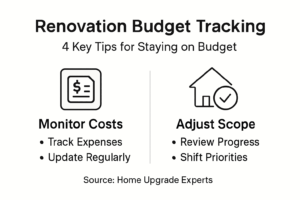
Remain proactive and transparent throughout the renovation process. If significant budget challenges emerge, discuss potential solutions with your contractor that preserve the core objectives of your renovation. This might involve phasing the project into multiple stages, selecting more economical material alternatives, or temporarily scaling back some aesthetic elements. Your goal is to maintain the fundamental integrity of the renovation while protecting your financial wellbeing.
Pro Tip: Maintain a separate contingency fund of 15% beyond your initial budget to provide financial flexibility for unexpected renovation challenges.
Step 5: Review completed work and verify cost effectiveness
The final stage of your home renovation journey involves a comprehensive review to ensure that all work meets your expectations and delivers genuine value. Renovation completion guidelines emphasize the importance of a systematic evaluation that goes beyond visual inspection and considers both quality and financial investment.
Conduct a meticulous walkthrough of the completed renovation, carefully comparing the finished work against the original contract specifications. Document any discrepancies or areas requiring additional attention, and discuss these directly with your contractor. Pay close attention to the quality of craftsmanship, ensuring that structural integrity, functional performance, and aesthetic details align with your initial vision. Verify that all necessary permits have been obtained and final inspections have been completed. Cross reference the total expenditure with your original budget, analyzing where costs were managed effectively and identifying any unexpected expenses that might impact your overall financial assessment.
Beyond the immediate visual review, consider the long term value of your renovation. Assess how the improvements contribute to your home’s functionality, energy efficiency, and potential market value. Collect and organize all documentation including contracts, receipts, permit copies, and inspection reports. This comprehensive documentation will not only help you track your investment but also prove valuable for future insurance purposes or potential property sales.
Pro Tip: Request a written warranty from your contractor covering labour and materials to protect your renovation investment and provide peace of mind.
Manage Renovation Costs with Confidence Using Trusted Local Experts
Renovating your home can be challenging when trying to balance your goals with a practical budget. You want to improve your living space without facing unexpected costs or delays. From assessing renovation priorities to monitoring spending and adjusting plans, every step demands careful attention and expertise. Henley Contracting understands the stress that comes with managing renovation costs and is dedicated to helping homeowners in Durham and surrounding areas navigate this complex process smoothly. Their commitment to clear communication and quality craftsmanship means your project stays on track, within budget, and meets your vision.

Take control of your home renovation by partnering with professionals who know how to deliver reliable results while managing costs efficiently. Explore their range of Renovations services and discover how decades of experience in Oshawa and beyond can give you peace of mind. Visit Henley Contracting today and start planning your next home upgrade with confidence. Don’t wait for unexpected headaches call now to secure your spot with trusted local contractors who make your renovation goals a reality.
Frequently Asked Questions
How can I effectively assess my renovation goals before creating a budget?
Start by listing all desired improvements and prioritising them based on necessity and potential return on investment. Evaluate your home’s current condition to distinguish between critical repairs and optional enhancements.
What are some essential upgrades that should be prioritized during renovations?
Focus on structural repairs, such as roof repairs and plumbing, as well as high-return areas like kitchens and bathrooms. Prioritise these essential projects to maximise safety and market value while keeping cosmetic changes for later consideration.
How do I develop a practical renovation budget that accommodates unexpected expenses?
Include a contingency fund of 10% to 20% of your total project budget to cover potential unforeseen challenges. Monitor costs regularly to ensure you stay within budget and adjust your spending as necessary based on ongoing expenses.
What should I consider when selecting a contractor for my home renovation?
Verify each contractor’s credentials, including licence and insurance, and request detailed written estimates. Evaluate past work by checking references from previous clients to ensure they have relevant experience in similar projects.
How can I track spending effectively throughout my renovation process?
Implement a detailed tracking system, such as a spreadsheet, to compare actual expenditures against your initial budget. Schedule regular budget review meetings with your contractor to address any overruns or potential savings.
What steps should I take to ensure the quality of completed renovation work?
Conduct a thorough walkthrough of the completed project, comparing the work against your original specifications. Document any discrepancies and communicate these directly with your contractor to ensure timely resolutions.


