

Home Addition Zoning: Rules for Ontario Homeowners
More than 60 percent of Canadian homeowners say property regulations influence their renovation decisions. Understanding zoning rules is a must for anyone in Durham Region planning a home addition. The strict zoning laws set by local municipalities can directly impact your home’s value, your investment returns, and your family’s ability to enjoy a legal, stress-free renovation. You will discover what matters most for property compliance and confident home expansion.
Key Takeaways
| Point | Details |
|---|---|
| Understand Zoning Bylaws | Homeowners must review local zoning bylaws to ensure compliance before commencing any home addition projects. Non-compliance can lead to legal and financial issues. |
| Types of Additions and Regulations | Familiarise yourself with different types of home additions and their specific zoning requirements, including permits needed for each type. |
| Zoning Approval Process | Follow a systematic approach to secure zoning approvals, including site assessments and detailed documentation to facilitate a smoother approval process. |
| Avoid Common Mistakes |
Engage professionals for early consultations to avoid common pitfalls that can lead to significant penalties and complicate the approval process. |
What Home Addition Zoning Means in Ontario
Home addition zoning represents a critical legal framework that determines how homeowners can modify and expand their residential properties in Ontario. These regulations are comprehensive guidelines established by local municipalities to control land use, building placement, and structural modifications. Zoning bylaws control land use within communities, specifying precise parameters about where and how construction can occur.
In practical terms, zoning rules dictate specific requirements for home additions, including maximum building heights, minimum setback distances from property lines, total lot coverage percentages, and permitted structural configurations. These regulations ensure that new construction maintains neighbourhood character, preserves adequate spacing between buildings, and prevents potential conflicts between neighbouring properties. Homeowners must carefully review their local municipal zoning bylaws before initiating any addition project, as non-compliant construction can result in significant legal and financial complications.
Understanding zoning regulations involves examining multiple interconnected factors. Local municipalities typically establish unique zoning classifications that define residential areas, considering aspects like lot sizes, building types, and potential land use restrictions. Some zones might allow secondary suites or detached structures, while others may impose strict limitations on structural modifications. Homeowners must obtain proper permits and potentially seek zoning variances if their planned addition does not precisely align with existing municipal regulations.
Pro tip: Before investing in architectural designs or construction plans, schedule a preliminary consultation with your local municipal planning department to understand the specific zoning requirements for your property and potential addition.
Types of Home Additions and Zoning Bylaws
Home additions in Ontario encompass a diverse range of structural modifications that are carefully regulated by municipal zoning bylaws. Additional residential units have become increasingly popular, with recent legislative changes allowing homeowners more flexibility in expanding their living spaces. These additions can range from simple room extensions to more complex secondary suites and detached structures.
The primary types of home additions in Ontario typically include rear extensions, second-storey additions, basement conversions, and detached secondary units. Each type of addition comes with specific zoning requirements that dictate their placement, size, and overall design. Municipalities enforce strict guidelines to ensure that new construction maintains neighbourhood aesthetics, preserves adequate spacing between buildings, and meets safety and structural standards. Homeowners must carefully consider lot coverage, setback requirements, building height restrictions, and potential impact on neighbouring properties when planning their addition.

Recent legislative changes have significantly expanded homeowners’ options for residential units. Urban areas now permit up to three residential units on single detached properties, opening new possibilities for homeowners looking to add secondary suites or garden units. However, these modifications are not without complexity. Zoning compliance remains critical, with local municipalities maintaining detailed regulations about lot sizes, permitted uses, parking requirements, and structural configurations. Homeowners must obtain proper zoning approvals and building permits, potentially requiring professional consultations with municipal planning departments to navigate the intricate approval process.
Here’s a quick comparison of typical home addition types and their zoning considerations:
| Addition Type | Zoning Challenges | Typical Permit Needs |
|---|---|---|
| Rear Extension | Lot coverage, setback limits | Building and zoning permits |
| Second-Storey Add | Height restrictions, design fit | Structural review required |
| Basement Conversion | Egress, parking requirements | Separate entrance approval |
| Detached Unit | Lot size, secondary suite rules | Detached unit permit, parking |
Pro tip: Consult with a local urban planner or zoning specialist before finalising your home addition plans to ensure complete compliance with municipal regulations and avoid potential legal complications.
Key Zoning Requirements for Durham Region Homes
Durham Region municipalities have intricate zoning bylaws governing residential development that homeowners must carefully navigate when planning home additions or modifications. These local regulations establish precise parameters for construction, including specific requirements for building height, lot coverage, setback distances, and overall structural configurations. Homeowners must understand these detailed guidelines to ensure their proposed renovations comply with municipal standards and avoid potential legal complications.
The zoning requirements in Durham Region typically address several critical aspects of residential construction. Lot size plays a fundamental role in determining potential additions, with municipalities establishing minimum and maximum lot coverage percentages. Setback regulations mandate specific distances from property lines, ensuring adequate spacing between structures and maintaining neighbourhood aesthetics. Building height restrictions prevent structures from exceeding predetermined limits, protecting sight lines and maintaining the character of residential areas. Additionally, parking requirements often accompany home addition approvals, ensuring that additional units or expanded living spaces do not create undue strain on local street infrastructure.
Secondary residential units present unique zoning challenges in Durham Region. Recent legislative changes have expanded opportunities for homeowners to create additional units, but these modifications remain subject to strict regulatory oversight. Municipalities may impose specific requirements regarding unit size, entrance placement, parking provisions, and exterior design compatibility. Homeowners must obtain comprehensive zoning approvals and building permits, often requiring detailed site plans and professional consultations to demonstrate full compliance with local regulations. These requirements aim to balance homeowner flexibility with community planning objectives and neighbourhood preservation.
Pro tip: Engage a local urban planning professional who specializes in Durham Region zoning regulations to review your home addition plans before submission, ensuring complete compliance and minimizing potential approval delays.
Steps to Obtain Zoning Approval and Permits
Navigating the zoning approval process requires a systematic approach, beginning with understanding local municipal requirements. Securing building permits involves multiple critical steps that homeowners must carefully execute to ensure successful project approval. The journey starts with comprehensive research and preparation of detailed documentation that demonstrates full compliance with local zoning regulations.
The first stage involves conducting a thorough site assessment and developing comprehensive architectural plans. Homeowners must create precise drawings that illustrate existing property configurations and proposed modifications, including exact measurements, structural details, and potential impacts on lot coverage and setbacks. These plans must be professionally drafted to meet municipal standards, typically requiring input from architects or professional designers who understand local zoning intricacies. Municipalities often require multiple copies of these documents, including site plans, architectural renderings, and structural calculations that demonstrate the proposed addition’s compliance with building codes and zoning bylaws.
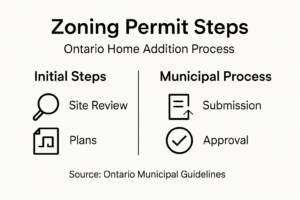
Once documentation is prepared, homeowners must submit their application to the local municipal planning department, which will conduct a comprehensive review of the proposed project. This process typically involves multiple stages of evaluation, including initial document screening, potential site inspections, and assessment of zoning compliance. Some municipalities may require additional steps such as neighbourhood notifications, public consultations, or hearings for more substantial modifications. If initial submissions do not fully meet zoning requirements, applicants might need to pursue minor variances or rezoning processes, which can involve additional documentation, fees, and potential public hearings to gain approval.
These steps provide an overview of the zoning and permit process in Ontario:
| Step | Purpose | Common Documents Required |
|---|---|---|
| Site Assessment | Review property constraints | Survey, images |
| Architectural Plans | Document design for compliance | Floorplans, elevations |
| Municipal Submission | Initiate formal zoning approval | Application form, site plans |
| Final Approval | Ensure full compliance and issue permit | Approved plans, fee receipts |
Pro tip: Engage a professional zoning consultant or architect familiar with local municipal regulations to review your documentation before submission, ensuring a smoother approval process and reducing the likelihood of initial rejections.
Common Mistakes and How to Avoid Violations
Homeowners frequently encounter significant challenges when navigating home addition zoning requirements, often making critical errors that can derail their renovation plans. These mistakes typically stem from inadequate research, misunderstanding municipal regulations, or attempting to circumvent established zoning protocols. Understanding the most common pitfalls can help homeowners proactively prevent potential legal and financial complications associated with non-compliant construction projects.
One of the most prevalent mistakes involves proceeding with construction without obtaining proper permits or conducting comprehensive zoning reviews. Homeowners sometimes assume that minor modifications do not require official approval, which can lead to substantial penalties, forced removals, or mandatory reconstruction. Specific violation risks include exceeding permitted lot coverage percentages, constructing structures that breach height restrictions, creating setbacks that do not meet municipal guidelines, or adding secondary units without proper authorization. These errors can result in significant financial consequences, including potential fines, retroactive permit fees, and mandatory demolition of non-compliant structures.
Mitigating zoning violation risks requires a methodical and proactive approach. Homeowners should prioritize early consultation with municipal planning departments, professional architects, and zoning specialists who can provide detailed guidance on local regulatory requirements. Comprehensive documentation, including precise architectural drawings, site surveys, and thorough compliance assessments, is crucial for identifying potential issues before construction begins. Additionally, maintaining open communication with local authorities and being transparent about proposed modifications can help navigate complex zoning regulations more effectively and reduce the likelihood of unintentional violations.
Pro tip: Invest in a preliminary zoning consultation with a professional who specializes in local municipal regulations to conduct a comprehensive review of your proposed home addition, identifying potential compliance issues before initiating any design or construction work.
Navigate Home Addition Zoning With Confidence and Skilled Craftsmanship
Understanding the complex zoning rules for home additions in Ontario can feel overwhelming. From setbacks to height restrictions and secondary unit regulations, each detail matters. If you want to avoid permit delays, zoning violations, or costly redesigns, expert guidance and precise construction are essential. Henley Contracting specialises in helping homeowners throughout Durham Region and beyond turn their home addition dreams into reality while ensuring full compliance with municipal zoning bylaws.
Ready to move forward with confidence Choose Henley Contracting for your next home addition or renovation project. Our team brings over 30 years of experience delivering quality workmanship combined with deep knowledge of local zoning requirements. Explore our comprehensive Renovations – Henley Contracting Ltd. services and see how we manage every detail from design through permits to build. To learn more and start your personalized zoning consultation, visit us today at Henley Contracting and take the first step toward a compliant, beautiful home addition.
Frequently Asked Questions
What are zoning bylaws and how do they affect home additions?
Zoning bylaws are regulations set by local municipalities that govern land use, building placement, and structural modifications. They dictate requirements such as maximum building heights, setback distances from property lines, and lot coverage percentages for home additions.
What types of home additions are typically regulated by zoning bylaws?
Common types of home additions include rear extensions, second-storey additions, basement conversions, and detached secondary units. Each type may have specific zoning requirements regarding size, placement, and overall design.
How do I ensure my home addition complies with local zoning regulations?
To ensure compliance, homeowners should thoroughly review their local zoning bylaws, seek guidance from municipal planning departments, and obtain the necessary permits before starting construction. Consulting with zoning specialists or architects can also help navigate compliance requirements.
What are the consequences of not adhering to zoning regulations?
Failing to comply with zoning regulations can result in legal and financial penalties, including fines, forced removals of non-compliant structures, or the need to obtain retroactive permits. It is crucial to follow all local guidelines to avoid such complications.


