
Role of Architect in Renovations – Maximizing Value in Ontario
Most Canadian homeowners are surprised to learn that involving an architect early can reduce renovation costs by up to 20 percent. In Durham Region, making thoughtful upgrades is more than a trend—it is a way to boost property value and tailor your space to fit your lifestyle. This guide sheds light on the pivotal role architects play, revealing how their expertise blends creativity, technical skill, and local knowledge for renovations with lasting impact.
Key Takeaways
| Point | Details |
|---|---|
| Architects Enhance Renovation Projects | Architects integrate design with technical expertise, ensuring projects meet functional and aesthetic goals while adhering to regulations. |
| Understanding Codes and Permits is Crucial | Navigating the complex regulatory landscape in Ontario is essential for compliance and budget management during renovations. |
| Collaborative Approaches Boost Success | Effective collaboration among architects, contractors, and trades ensures clear communication and reduces potential project delays. |
| Architects Manage Financial Strategies | Utilizing value engineering and detailed budgeting, architects help homeowners maximise investment potential while controlling costs. |
Architect’s Role in Home Renovations Defined
In Ontario’s dynamic home renovation landscape, architects play a pivotal role far beyond simple design sketches. These licensed professionals are strategic partners who transform spaces by integrating aesthetic vision with technical expertise. Architects balance creative imagination with practical requirements, ensuring renovation projects maximize both functional performance and investment potential.
The comprehensive scope of an architect’s involvement includes critical pre-design services such as site evaluation, detailed design exploration, and comprehensive planning. By conducting thorough assessments, architects identify potential challenges before construction begins, which helps homeowners avoid costly modifications later. Their holistic approach combines artistic design with technical knowledge, addressing complex requirements like spatial functionality, energy efficiency, and budgetary constraints.
Specifically for Ontario homeowners, architects bring unique regional insights. They understand local building codes, climate considerations, and architectural styles prevalent in communities from Toronto to smaller municipalities in Durham Region. Their expertise allows them to recommend design solutions that not only enhance living spaces but also improve property value and long-term sustainability. This means creating renovations that are aesthetically pleasing, structurally sound, and aligned with local architectural traditions.
Pro tip: Before engaging an architect, request a comprehensive portfolio demonstrating their experience with renovations similar to your specific project scope and style.
Types of Architectural Services for Renovations
Architectural services for home renovations encompass a comprehensive suite of professional offerings designed to transform living spaces strategically. Architects provide detailed services ranging from initial conceptualization to final project execution, ensuring homeowners receive expert guidance throughout their renovation journey. These services are meticulously structured to address every aspect of architectural design and implementation.
The primary architectural services for renovations typically include schematic design, design development, construction documentation, and construction administration. During schematic design, architects collaborate closely with homeowners to establish project goals, developing initial conceptual drawings and preliminary cost estimates. The design development phase refines these initial concepts, producing intricate plans that specify precise materials, spatial configurations, and technical systems required for the renovation.
Architectural services extend beyond basic design, encompassing critical technical assessments such as existing conditions analysis, code compliance review, and energy-efficiency evaluations. For Ontario homeowners, this means architects bring specialized expertise in navigating local building regulations, understanding regional architectural styles, and recommending solutions that enhance both functional performance and property value. Their comprehensive approach ensures renovations are not just aesthetically pleasing but also structurally sound and compliant with provincial standards.
Pro tip: Request a detailed breakdown of architectural services during your initial consultation to understand the full scope of professional support available for your renovation project.
Here’s a summary of key architectural service phases and their main benefits for Ontario homeowners:
| Service Phase | Primary Focus | Typical Benefits for Homeowners |
|---|---|---|
| Schematic Design | Concept development | Clarifies goals and sets project direction |
| Design Development | Detailed planning | Refines concepts and selects materials |
| Construction Documents | Technical plans | Ensures precise contractor execution |
| Construction Admin. | Site oversight | Maintains quality and regulatory compliance |
Navigating Codes, Permits and Regulations
Building codes and regulatory frameworks represent critical considerations for home renovation projects in Ontario, establishing essential guidelines that protect homeowners’ investments and ensure structural safety. These comprehensive standards encompass multiple layers of requirements, from structural integrity to energy efficiency, safety protocols, and accessibility considerations. Understanding these regulations is not merely a bureaucratic exercise but a fundamental aspect of responsible renovation planning.
The permitting process involves navigating complex municipal and provincial requirements that vary across different Ontario jurisdictions. Architects play a crucial role in interpreting and implementing these regulations, preparing detailed documentation that demonstrates compliance with local building codes, zoning restrictions, and safety standards. Architectural professionals are mandated to ensure regulatory compliance throughout the project approval stages, acting as intermediaries between homeowners and municipal authorities.

Specifically for Ontario homeowners, this regulatory landscape includes addressing specific considerations such as heritage preservation in older neighbourhoods, energy efficiency standards, structural modification guidelines, and accessibility requirements. Architects bring specialized expertise in translating these complex regulatory frameworks into actionable renovation strategies, ensuring that every aspect of the project meets legal and safety standards while maintaining the homeowner’s design vision and functional objectives.
Pro tip: Request a comprehensive regulatory compliance checklist from your architect to understand potential permitting challenges before initiating your renovation project.
Collaboration With Contractors and Trades
Effective collaboration between architects, contractors, and trades professionals forms the critical backbone of successful home renovation projects in Ontario. This intricate process requires sophisticated communication strategies, technical expertise, and a shared commitment to transforming design concepts into tangible living spaces. Architects serve as central conductors, orchestrating interactions between various specialized professionals to ensure seamless project execution.
The design-build approach represents a sophisticated method of project delivery that directly addresses traditional collaboration challenges. By integrating design and construction services under a unified contractual framework, this methodology promotes single-point accountability and reduces potential communication barriers. Architects leverage their technical understanding to coordinate between electricians, plumbers, carpenters, and other trade specialists, translating conceptual designs into precise, executable plans that meet both aesthetic and functional requirements.
In the Ontario renovation landscape, successful collaboration demands more than technical competence. Architects must navigate complex interpersonal dynamics, balancing the creative vision of homeowners with the practical constraints of construction trades. This involves detailed planning, proactive conflict resolution, and a nuanced understanding of each trade’s specific capabilities and limitations. By fostering an environment of mutual respect and clear communication, architects ensure that every professional involved understands their role in achieving the project’s overall objectives.
Pro tip: Request regular collaborative meetings with your architect and key trade professionals to maintain transparent communication and address potential challenges proactively.
Budgeting, Value Engineering and Cost Control
Architects play a critical role in managing financial parameters and optimizing renovation investments for Ontario homeowners. Their expertise extends far beyond design, encompassing sophisticated financial strategies that balance aesthetic aspirations with budgetary constraints. By leveraging comprehensive understanding of construction economics, architects transform potential financial challenges into strategic opportunities for value creation.
The value engineering approach represents a systematic methodology for cost management and investment optimization. Architects coordinate structured evaluations that assess design options, material selections, and construction methods to maximize project value while maintaining high-quality standards. This process involves critical analysis of each project element, identifying potential cost reductions without compromising functional performance or design integrity. Homeowners benefit from architects’ ability to recommend alternative solutions that deliver equivalent or enhanced outcomes at more economical price points.
In the Ontario renovation landscape, budgeting requires nuanced understanding of regional construction costs, material availability, and regulatory compliance expenses. Architects serve as financial strategists, developing comprehensive budget models that account for both immediate construction expenses and long-term operational costs. Their expertise helps homeowners make informed decisions by providing transparent cost projections, identifying potential financial risks, and developing strategies to mitigate unexpected expenditures throughout the renovation process.
Pro tip: Request a detailed cost-breakdown worksheet from your architect that categorizes expenses, potential contingencies, and projected long-term value additions to your renovation project.
Risks, Legal Duties and Common Mistakes
Architects bear significant professional responsibilities that extend well beyond aesthetic design considerations, encompassing complex legal and ethical obligations in home renovation projects. In Ontario’s regulatory landscape, these professionals must navigate intricate legal frameworks that define their professional standard of care, potential liabilities, and contractual responsibilities. Understanding these nuanced expectations is crucial for both architects and homeowners seeking successful renovation outcomes.
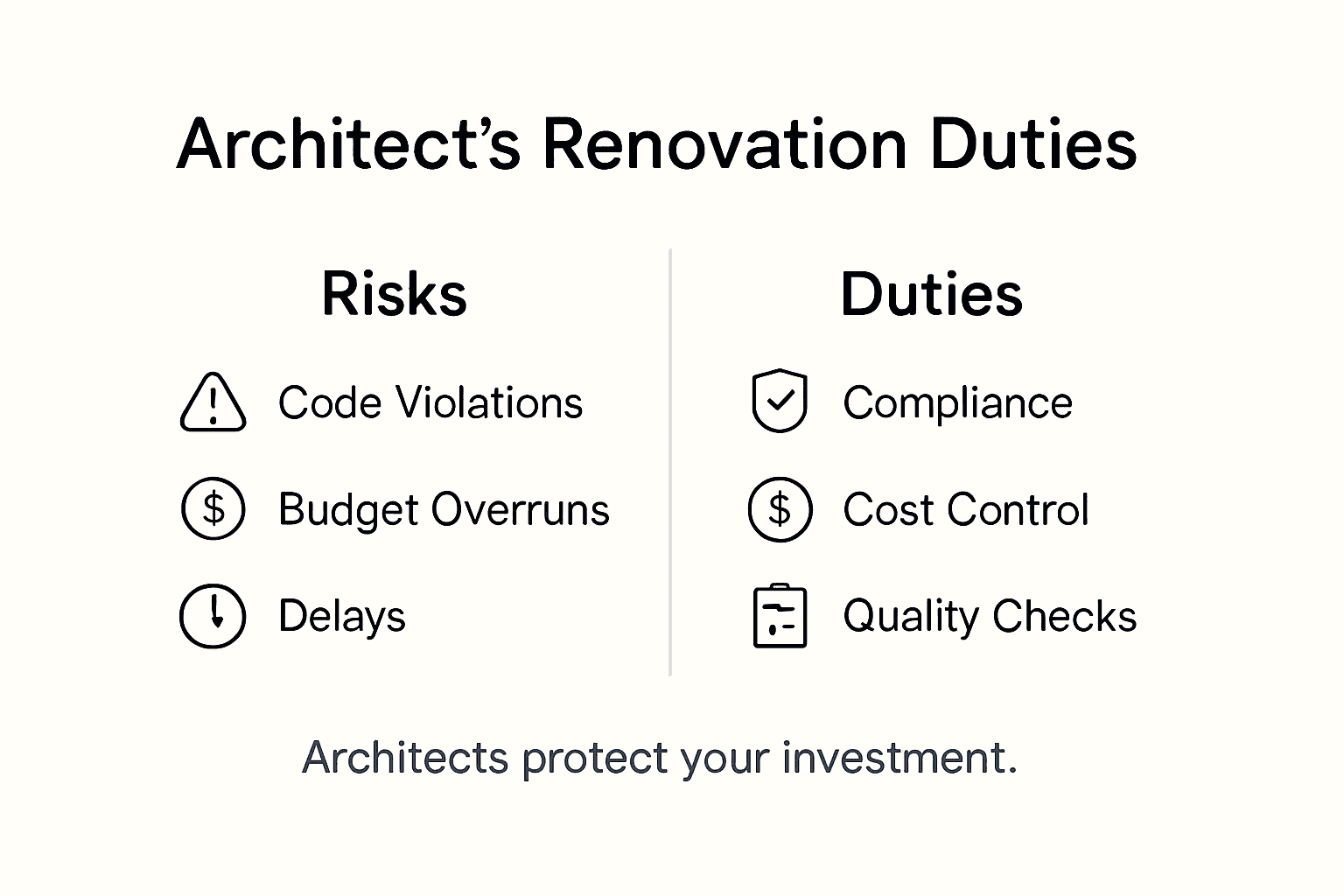
The legal framework surrounding architectural practice involves multiple layers of professional accountability. Construction law establishes comprehensive guidelines governing project execution, contract provisions, and dispute resolution mechanisms, requiring architects to maintain meticulous documentation and transparent communication. Common mistakes often stem from inadequate contract definitions, insufficient coordination with contractors, or non-compliance with provincial building codes and regulations. These oversights can potentially expose both architects and homeowners to significant financial and legal risks.
Specifically for Ontario renovation projects, architects must demonstrate rigorous attention to provincial licensing requirements, building standards, and professional conduct regulations. This involves proactively identifying potential project risks, developing comprehensive mitigation strategies, and maintaining clear communication channels with clients, contractors, and regulatory bodies. Their role extends beyond design implementation to include safeguarding clients’ interests through strategic risk management and adherence to established professional standards.
Pro tip: Request a detailed risk assessment document from your architect that explicitly outlines potential project challenges, mitigation strategies, and legal considerations specific to your renovation.
Compare common renovation risks with an architect’s mitigation strategies:
| Typical Risk | Potential Impact | Architect’s Mitigation Approach |
|---|---|---|
| Code non-compliance | Fines, delays | Comprehensive documentation and review |
| Budget overruns | Increased costs | Detailed cost planning, value engineering |
| Poor contractor coordination | Quality issues, delays | Frequent site meetings, clear scope definitions |
| Incomplete contracts | Disputes, legal exposure | Precise, transparent contract terms |
Maximise Your Renovation Value with Trusted Local Experts
Navigating the complex role of architects in home renovations can feel overwhelming. From balancing design aspirations with strict Ontario building codes to managing budgets and coordinating contractors there are many challenges that homeowners face. This article highlights the critical need for professional guidance in schematic design, code compliance, and cost control to ensure your renovation is not only beautiful but also safe and financially sound.
At Henley Contracting we understand those concerns deeply. With over three decades of experience serving Pickering Ajax Whitby Bowmanville Uxbridge and Muskoka regions, we offer expert residential renovation services that integrate seamlessly with architectural plans. Whether you need help refining your renovation goals or require precise construction execution our team is committed to delivering quality craftsmanship and transparent communication throughout your project. Learn more about our comprehensive approach to Renovations and how we work alongside professionals to bring your vision to life.
Take the next step toward a renovation that maximises value durability and aesthetic appeal. Contact Henley Contracting today by visiting our website at https://henleycontracting.com to schedule a consultation. Discover how our trusted local expertise can turn your architectural plans into a flawless living space that stands the test of time.
Frequently Asked Questions
What is the role of an architect in home renovations?
Architects play a crucial role in home renovations by blending creative design with technical expertise. They provide services including site evaluations, design development, construction documentation, and oversight to ensure projects meet functional, aesthetic, and regulatory standards.
How can architects help with navigating building codes and permits?
Architects understand complex building codes and regulations, preparing detailed documentation to demonstrate compliance. They act as intermediaries between homeowners and municipal authorities to ensure that renovation projects adhere to local standards and requirements.
What are the benefits of hiring an architect for renovations?
Hiring an architect can maximize the project’s value by providing expert guidance on design, cost management, and compliance with regulations. Their involvement helps ensure the renovations are structurally sound, aesthetically pleasing, and aligned with the homeowner’s vision and budget.
How do architects manage renovation budgets and costs?
Architects employ strategies such as value engineering to optimize renovation costs. They analyze design options and materials to maximize project value while maintaining quality standards, providing homeowners with clear cost projections and identifying potential financial risks.