
What Is Home Remodeling? Impact on Ontario Homes
Most Canadian homeowners in Durham Region discover that remodeling projects often deliver up to 80 percent of investment returns when selling their property. Maximizing value and improving daily comfort requires more than surface upgrades, especially with changing design trends and rising energy efficiency standards in Ontario. This article offers practical insights on choosing the right renovations, understanding costs, and navigating local regulations to achieve a smarter, more functional home.
Key Takeaways
| Point | Details |
|---|---|
| Home Remodeling Enhances Value | Comprehensive renovations can significantly increase property value and improve comfort. |
| Prioritize High-Return Projects | Focus on kitchen and bathroom updates for the best financial returns on investment. |
| Plan and Budget Thoroughly | A detailed budget and contingency fund are essential to avoid financial pitfalls during renovations. |
| Understand Legal Requirements | Securing the necessary permits and compliance with building codes is crucial for a successful remodeling project. |
Home Remodeling Defined for Canadians
Home remodeling represents a comprehensive approach to transforming residential spaces, encompassing strategic upgrades and improvements that enhance both functionality and aesthetic appeal. In the Canadian context, remodeling goes beyond simple maintenance, involving significant modifications that can fundamentally reshape residential structures.
For Ontario homeowners, home remodeling typically involves targeted renovations across interior and exterior domains. These projects range from structural alterations like updating electrical systems and plumbing to aesthetic enhancements such as modernizing kitchen layouts or upgrading roofing materials. The primary objectives often include improving living comfort, increasing property value, addressing maintenance requirements, and creating more energy-efficient living environments.
Remodeling projects in Canada are strategically planned endeavours that require careful consideration of specific goals, budget constraints, and desired outcomes. Homeowners frequently approach these projects with clear intentions, whether they aim to expand living spaces, upgrade aged fixtures, or implement modern design elements that align with contemporary lifestyle needs. Professional guidance becomes crucial in navigating the complex landscape of renovation decisions, especially when considering specialized upgrades like accessibility modifications or green technology integrations.
Pro tip: Before initiating any home remodeling project, conduct a comprehensive home assessment to identify potential structural improvements and prioritize renovations that offer the highest return on investment.
Types of Remodeling Projects in Ontario
Ontario homeowners engage in a diverse range of remodeling projects designed to enhance living spaces, improve property functionality, and increase overall home value. Residential renovation strategies frequently focus on targeted upgrades that address both aesthetic and practical considerations, reflecting the province’s dynamic housing market.
The most prevalent remodeling projects in Ontario typically encompass several key categories. Kitchen and bathroom renovations remain the most popular, offering significant returns on investment and dramatically improving living comfort. These spaces often receive priority attention, with homeowners investing in modern fixtures, efficient layouts, and high-quality materials. Energy efficiency upgrades have also gained substantial momentum, including window replacements, insulation improvements, and heating system modernizations that align with provincial sustainability initiatives.
Structural modifications represent another critical dimension of Ontario home remodeling. Basement finishing, room additions, and open-concept redesigns allow families to maximize their existing living spaces without relocating. Homeowners increasingly view these projects as strategic investments, recognizing that well-executed renovations can substantially increase property marketability and functional utility. Specialized upgrades like accessibility modifications and smart home technology integrations are becoming more prevalent, reflecting evolving residential design trends.
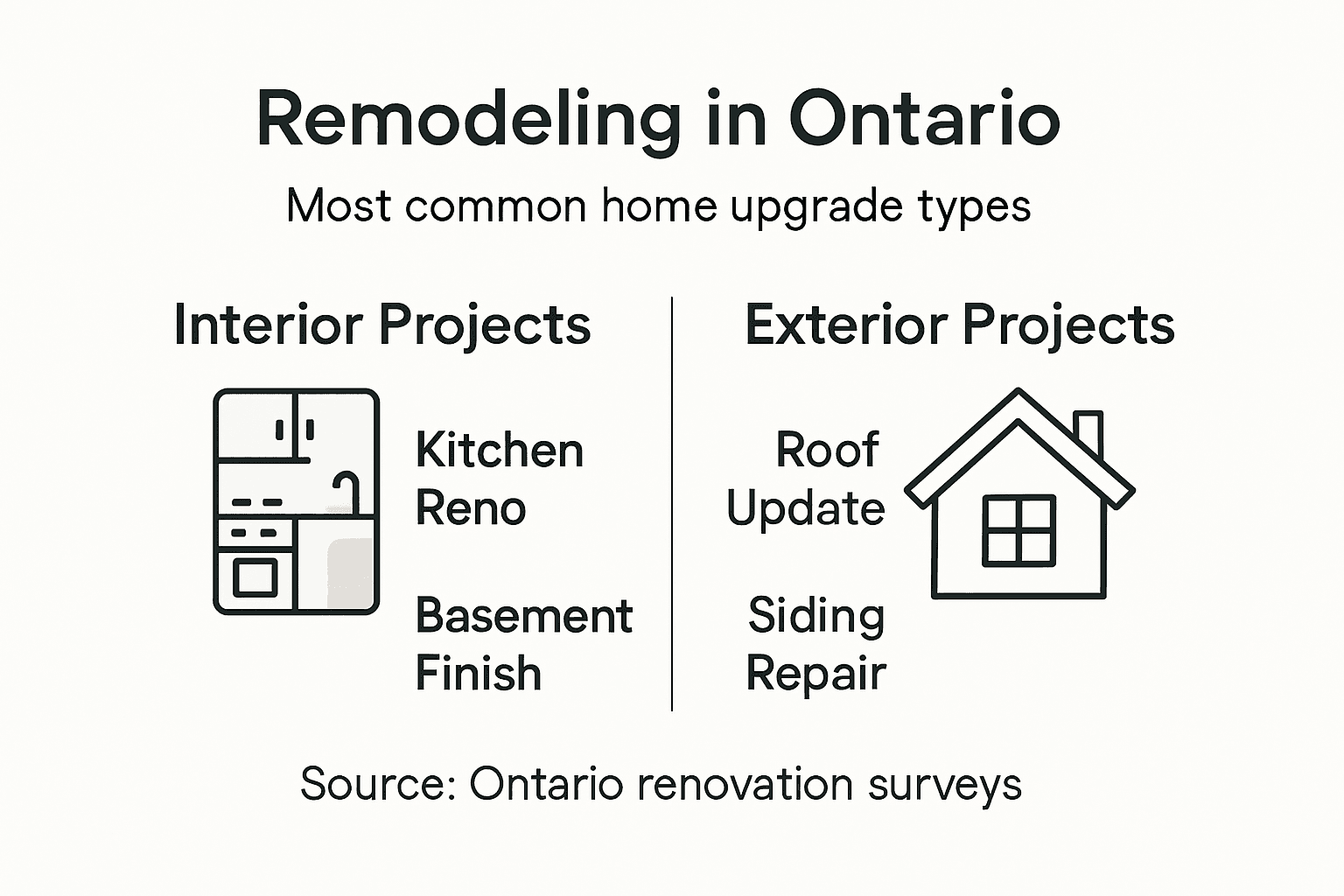
Here is a summary of popular remodeling project types in Ontario and their potential benefits:
| Project Type | Main Benefit | Typical Complexity | Added Value for Owners |
|---|---|---|---|
| Kitchen Renovation | Improved functionality | High | Enhances resale value |
| Bathroom Upgrade | Modern comfort | Medium | Boosts market appeal |
| Basement Finishing | Increased living space | Medium to High | Maximizes usable area |
| Energy Efficiency | Reduced utility costs | Variable | Long-term savings |
| Accessibility Retrofit | Improved mobility | Medium | Future-proofing home |
| Smart Home Integration | Convenience, security | Medium | Attracts tech buyers |
Pro tip: Prioritize remodeling projects that offer the highest return on investment by consulting local real estate professionals and obtaining multiple contractor assessments before committing to major renovations.
Key Steps in the Remodeling Process
Successful home remodeling in Ontario requires a strategic and systematic approach that transforms initial concepts into tangible improvements. Residential remodeling involves comprehensive planning that addresses both aesthetic desires and practical constraints, ensuring homeowners achieve their desired outcomes efficiently and effectively.
The remodeling process typically unfolds through several critical stages. Initially, homeowners must conduct a thorough assessment of their current space, defining clear goals and identifying specific areas requiring transformation. This phase involves measuring existing rooms, evaluating structural limitations, and developing a comprehensive understanding of desired functional and aesthetic improvements. Budgeting emerges as a crucial next step, requiring careful financial planning that accounts for material costs, labour expenses, potential contingencies, and desired quality standards.
Professional collaboration represents another pivotal component of successful home remodeling. Engaging experienced contractors, designers, and potentially architects helps translate conceptual ideas into realistic implementation strategies. This stage involves obtaining detailed project proposals, comparing contractor credentials, securing necessary municipal permits, and establishing clear communication channels. Material selection becomes a nuanced process of balancing personal preferences with durability, maintenance requirements, and overall design cohesion. Homeowners must also anticipate potential disruptions, establishing realistic project timelines and creating contingency plans for unexpected challenges that may arise during renovation.
Pro tip: Create a dedicated project folder containing all renovation documents, including contracts, design sketches, material samples, and communication records to maintain organized oversight throughout the remodeling process.
Permits, Codes, and Legal Obligations
Home remodeling in Ontario demands meticulous attention to legal requirements and regulatory frameworks that protect homeowners and ensure structural safety. National Building Code standards form the foundational framework governing residential renovation projects, establishing critical guidelines for construction, safety, and performance.
Municipal permitting processes represent a crucial initial step in any remodeling undertaking. Homeowners must secure appropriate permits before commencing work, which typically involves submitting detailed renovation plans to local building departments for comprehensive review. Different types of projects require varying levels of municipal oversight – structural modifications, electrical upgrades, plumbing alterations, and significant spatial reconfigurations each demand specific documentation and potential pre-approval inspections. These regulatory mechanisms ensure that renovations meet provincial building standards, energy efficiency requirements, and safety protocols.
Beyond municipal regulations, Ontario homeowners must navigate additional legal considerations, including compliance with evolving environmental standards and potential zoning restrictions. Recent federal initiatives like the Canada Green Buildings Strategy introduce more stringent requirements for energy performance and sustainable construction practices. Contractors and homeowners alike must stay informed about these changing regulations, which can impact everything from material selections to overall project design. Professional consultation becomes essential in understanding the complex landscape of legal obligations, helping homeowners avoid potential penalties or mandatory corrective actions.
Pro tip: Consult with a local building inspector or municipal official before finalizing renovation plans to confirm specific permit requirements and ensure full compliance with current building codes.
Costs, Value, and Common Pitfalls
Home remodeling in Ontario represents a significant financial investment with complex economic considerations that extend beyond immediate project expenses. Remodeling project economics demonstrate that strategic renovations can substantially increase property values while addressing functional requirements for homeowners.
Cost structures for home renovations vary dramatically based on project scope, material selections, and labour complexities. Kitchen and bathroom remodels consistently rank highest in potential return on investment, typically recovering between 60-80% of project costs during property resale. Homeowners must carefully balance aesthetic desires with financial prudence, considering factors like material durability, energy efficiency potential, and long-term maintenance requirements. Detailed budget planning becomes critical, with experts recommending establishing a contingency fund representing 10-15% of total project costs to address unexpected challenges or structural discoveries during renovation.

Navigating potential pitfalls requires proactive planning and comprehensive research. Common challenges include underestimating project timelines, selecting inexperienced contractors, inadequate permit management, and failing to anticipate structural complexities. Successful remodeling demands thorough contractor vetting, obtaining multiple detailed quotes, verifying professional credentials, and maintaining clear communication channels throughout the renovation process. Homeowners should prioritize contractors with demonstrated expertise in specific project types, comprehensive insurance coverage, and positive local references that validate their professional reputation.
Reviewing common financial and operational pitfalls can help Ontario homeowners plan successful remodels:
| Pitfall | Impact on Project | Prevention Tip |
|---|---|---|
| Underestimating costs | Budget shortfall | Set a contingency fund |
| Poor contractor choice | Delays, quality issues | Vet credentials thoroughly |
| Permit mismanagement | Legal penalty, delays | Confirm requirements early |
| Skipping inspections | Safety risks | Schedule timely reviews |
| Inadequate documentation | Disputes and confusion | Maintain organized records |
Pro tip: Create a comprehensive spreadsheet tracking all renovation expenses, including material costs, labour charges, permits, and contingency funds, to maintain precise financial oversight throughout your remodeling project.
Transform Your Ontario Home with Expert Remodeling Solutions
Home remodeling presents unique challenges such as balancing aesthetic upgrades with structural safety, managing detailed budgets, and navigating complex legal permits. If you are seeking to increase your living space, improve energy efficiency, or modernize your home while avoiding common pitfalls like permit mismanagement or contractor issues this article’s insights are crucial. Henley Contracting understands these obstacles and offers trusted expertise to help you achieve your renovation goals with confidence.
Explore our specialized Renovations services designed for Ontario homeowners who want quality craftsmanship combined with local knowledge.
Take the next step toward transforming your home with a company that has proudly served communities including Oshawa, Pickering, and Whitby since 1989. Visit Henley Contracting today to discover how we can turn your remodeling vision into reality and guide you through each step from design to permits and completion. Don’t wait to enhance your home’s value and comfort with trusted professionals by your side. Learn more about our commitment to personalized service and start planning your renovation now.
Frequently Asked Questions
What does home remodeling typically involve?
Home remodeling involves significant upgrades and changes to residential spaces, including structural modifications, aesthetic improvements, and energy efficiency enhancements.
What are the most common types of remodeling projects?
The most common remodeling projects include kitchen and bathroom renovations, basement finishing, energy efficiency upgrades, and accessibility modifications.
How do I know if my remodeling project will increase my home’s value?
Many remodeling projects, especially kitchen and bathroom renovations, have a high return on investment and can significantly enhance a home’s marketability and value.
What are some common pitfalls to avoid when remodeling a home?
Common pitfalls include underestimating costs, poor contractor selection, inadequate permit management, and insufficient documentation. Careful planning and thorough research can help mitigate these issues.