
How to Hire a Contractor for Stress-Free Renovations
Most Canadian homeowners in Durham Region face costly setbacks and stress when home renovation projects drag on due to poor communication and unreliable contractors. Every delay means lost time, wasted money, and dreams put on hold. This guide gives you clear steps to choose contractors who deliver quality work on schedule, protect your investment, and help you finally create the home you want.
Quick Summary
| Key Insight | Explanation |
|---|---|
| 1. Define clear renovation goals | Document your project goals and requirements to guide contractors effectively. This clarity prevents misunderstandings down the line. |
| 2. Research qualified contractors | Evaluate contractors using local associations and reviews. This helps you find professionals with proven expertise for your specific renovation type. |
| 3. Request references and portfolios | Validate contractor capabilities by checking references and reviewing past work. Specific tasks like communication and problem-solving can highlight their reliability. |
| 4. Compare estimates carefully | Scrutinize estimates beyond price, including scope, payment schedules, and potential extra costs to safeguard your renovation budget. |
| 5. Monitor project progress actively | Schedule regular check-ins with your contractor to ensure the project adheres to the original design, timeline, and quality standards. |
Step 1: Define your project goals and requirements
Setting clear project goals and requirements is your roadmap to a successful home renovation. This critical first step helps you communicate exactly what you want and ensures your contractor understands your vision from day one. By documenting project requirements thoroughly, you create a solid foundation for your entire renovation journey.
Start by getting specific about what you want to achieve. Are you looking to update your kitchen, add a bathroom, or completely transform a living space? Write down your must-have features, functional needs, and aesthetic preferences. Consider practical aspects like budget constraints, timeline expectations, and any specific materials or design styles you prefer. This level of detail matters because clear requirements help contractors provide accurate quotes and prevent misunderstandings later. Think about how you use the space currently and how you want it to function after renovation. Are you seeking more storage? Better flow? Enhanced natural lighting? Documenting these specifics will guide your contractor in translating your vision into reality.
Home Renovation Insider Tip: Create a mood board or digital folder with images that capture your design vision to help your contractor understand your aesthetic preferences exactly.
Step 2: Research qualified contractors in your area
Researching qualified contractors is crucial to finding the right professional for your home renovation project. Your goal is to identify experienced, reputable professionals who can transform your vision into reality while ensuring quality workmanship and reliability. By understanding how to effectively evaluate potential contractors, you can significantly reduce the risk of project complications and unexpected challenges.
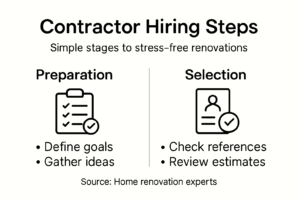
Start your research by leveraging multiple information sources. Check local professional associations, online review platforms, and construction research resources to gather comprehensive insights. Look for contractors with established track records in the Durham Region, focusing on those who specialise in your specific type of renovation project. Verify their credentials by examining professional licences, insurance documentation, and certifications. Pay close attention to their portfolio of completed projects, seeking examples that demonstrate expertise in renovations similar to your planned work. Request references from recent clients and take the time to contact them directly to understand their experience working with the contractor.
Renovation Research Tip: Create a standardised evaluation spreadsheet to compare contractors objectively, tracking key details like licensing, experience, project costs, and client references.
Here’s a summary of key criteria to evaluate when researching and comparing contractors:
| Criteria | Why It Matters | What to Look For |
|---|---|---|
| Professional Licensing | Ensures legal compliance | Valid, up-to-date licence |
| Insurance Coverage | Protects against liability | Adequate general liability cover |
| Relevant Experience | Confirms expertise in your type | Similar renovation projects |
| Client References | Reveals track record | Positive feedback from clients |
| Portfolio Quality | Demonstrates technical skill | High-quality, recent examples |
Step 3: Request references and review past work
Reviewing a contractor’s references and past work is your opportunity to validate their professional capabilities and ensure they can deliver the quality renovation you expect. This step transforms your research from theoretical potential into concrete evidence of a contractor’s real world performance.
When requesting references, approach the process systematically. Follow structured reference checking guidelines that help you extract meaningful insights about the contractor’s work history and performance. Request at least three references from projects similar to yours in scope and complexity. When speaking with past clients, ask specific questions about project timelines, communication quality, budget adherence, problem solving skills, and overall satisfaction. Pay close attention to how the contractor handled unexpected challenges during previous renovations. Request to see a comprehensive portfolio of completed projects that showcase their technical skills and design capabilities. Look for examples that demonstrate versatility and expertise in the specific type of renovation you are planning. Examine before and after photographs, review detailed project descriptions, and if possible arrange site visits to see actual completed work.
Renovation Investigation Tip: Request digital or printed documentation of past projects and cross reference client testimonials to verify the authenticity and consistency of a contractor’s professional claims.
Step 4: Compare estimates and contract terms
Comparing contractor estimates and contract terms is your critical defence against unexpected costs and potential misunderstandings. This step transforms multiple quotes into a strategic comparison that protects your renovation investment and ensures clear expectations between you and your chosen contractor.

Carefully analyse each estimate by looking beyond the total price. Examine contract types and risk allocation to understand how different contract structures might impact your project. Request detailed breakdowns that outline material costs, labour expenses, potential additional charges, and specific project milestones. Pay close attention to payment schedules, cancellation terms, and clauses related to unexpected work or changes. Look for transparency in how contingencies are handled and whether the estimate includes a clear scope of work. Scrutinise the language around potential additional costs or change orders. A reputable contractor will provide a comprehensive estimate that demonstrates thoroughness and professionalism, with clear explanations for each line item and realistic expectations for potential variations.
Renovation Contract Tip: Create a comparison matrix for each contractor estimate, colour coding sections to highlight key differences in pricing, timeline, and contract terms for easy side by side evaluation.
The table below highlights contract and estimate elements you should compare before making a decision:
| Item | Description | Impact on Your Project |
|---|---|---|
| Scope of Work | Details included tasks and deliverables | Clarifies expectations, avoids disputes |
| Payment Schedule | When and how payments are made | Affects cash flow and risk |
| Change Orders | How modifications are managed | Controls additional costs and changes |
| Cancellation Terms | Rights and penalties if cancelled | Protects both parties’ interests |
| Contingency Clauses | Handling unforeseen work or costs | Manages risk and project stability |
Step 5: Verify credentials and finalize your choice
Verifying a contractor’s credentials is your final safeguard before committing to a renovation project. This crucial step transforms your research and negotiations into a confident, well informed hiring decision that protects your investment and ensures professional quality workmanship.
Prioritize comprehensive credential verification by examining professional licensing directories to confirm the contractor’s legal standing and professional qualifications. Request and independently verify their business registration, liability insurance, Workers Safety and Insurance Board (WSIB) clearance, and any specific trade certifications relevant to your renovation project. Look beyond basic documentation by checking their standing with local trade associations and investigating any past complaints or disciplinary actions. Conduct a thorough background check that includes reviewing their business history, financial stability, and reputation in the Durham Region. Pay special attention to certifications specific to your renovation type, whether it involves electrical work, plumbing, structural modifications, or specialized home improvement techniques. A reputable contractor will welcome your diligence and readily provide all necessary documentation to demonstrate their professional credibility.
Verification Strategy Tip: Create a dedicated digital or physical folder to collect and organize all contractor credentials, making it easy to compare and validate professional qualifications across potential service providers.
Step 6: Monitor progress and confirm project completion
Monitoring your renovation project’s progress is essential to ensuring your vision becomes reality exactly as planned. This critical stage transforms your carefully selected contractor’s work into the home transformation you have been dreaming about, with active oversight protecting your investment and maintaining quality standards.
Progress reports provide crucial project transparency that help you track every stage of your renovation. Schedule regular onsite meetings with your contractor to review completed work, upcoming milestones, and address any potential concerns immediately. Establish clear communication protocols from the start, determining how often you will receive updates and through what method phone, email, or in person meetings. During these check ins, carefully verify that the work matches the original contract specifications, paying close attention to material quality, workmanship, and adherence to agreed timelines. Document each stage with photographs and written notes, creating a comprehensive record of the project’s evolution. Be proactive about identifying and discussing any deviations from the original plan, ensuring that modifications are mutually agreed upon and properly documented.
Project Management Tip: Create a dedicated digital folder with dated photographs and meeting notes to maintain a clear, chronological record of your renovation project that can help resolve any potential disputes.
Make Your Renovation Stress-Free with Expert Help from Henley Contracting
Hiring the right contractor can feel overwhelming without clear goals and trustworthy guidance. If you want to avoid common pitfalls like unclear contracts, missed deadlines, or subpar workmanship this is your chance to partner with a team that understands your needs and delivers exceptional results. At Henley Contracting, our over 30 years of experience in the Durham Region means we bring professionalism you can rely on to every home renovation project.

Explore our Renovations services to see how we translate your project requirements into precise, high-quality craftsmanship. Whether you are updating a single room or embarking on a full custom build, our transparent process ensures you stay informed and confident throughout each stage. Don’t wait until unexpected issues arise—take the first step by visiting Henley Contracting today and reach out to begin your stress-free renovation journey.
Frequently Asked Questions
How do I define project goals for my renovation?
Start by listing what you want to achieve with your renovation, such as updating a kitchen or adding a bathroom. Specify must-have features, budget constraints, and desired timelines to create a clear project outline.
What should I look for when researching contractors?
Focus on contractors with relevant experience and positive reviews. Check their licensing, insurance, and past project portfolios to ensure they have a strong track record in renovations similar to yours.
How can I evaluate a contractor’s references?
Request at least three references and ask specific questions about their projects, such as budget adherence and communication quality. Take detailed notes to compare responses and identify any patterns about the contractor’s work ethic and reliability.
What details should I compare in contractor estimates?
Examine each estimate for scope of work, payment schedules, and potential change order processes. Highlight key differences using a comparison matrix to identify the most comprehensive and transparent proposal.
How can I ensure my contractor is properly credentialed?
Verify their licensing, insurance coverage, and any necessary trade certifications. Organise the documentation you gather to easily compare contractors and ensure they meet all legal and professional requirements for your renovation.
How often should I monitor my renovation’s progress?
Schedule regular check-ins with your contractor, ideally weekly or bi-weekly, to review completed work and upcoming tasks. Maintain a written record of these meetings to ensure everything aligns with your original project specifications.